Your Experienced Chiropractor in Silver Spring Maryland

Providing quality chiropractic care and physical therapy to those seeking a chiropractor Silver Spring.

Altacare Chiropractic and Rehabilitation

FAQ for Altacare Chiropractic

1.Does Altacare Chiropractic accept my insurance?

Yes, Altacare Chiropractic accepts most major insurance plans and  PIP claims for auto accidents. We coordinate directly with your insurance provider to ensure your treatments are covered, allowing you to focus entirely on your recovery. Check your coverage via our New Patient Information.

2. Can a chiropractor in Silver Spring help manage scoliosis without surgery?

Yes. At Altacare, we provide non-invasive scoliosis management focusing on spinal alignment, posture correction, and specialized exercises. Our goal is to reduce pain, improve mobility, and prevent further curvature progression. Dr. Shane Cradic utilizes specific adjustments tailored to the unique biomechanics of scoliosis patients.

3. What should I expect during my first visit to Altacare Chiropractic?

Your first visit involves a comprehensive consultation where we review your medical history and perform a physical exam, including orthopedic and neurological testing. Dr. Cradic will discuss your diagnosis and create a personalized treatment plan. Most patients receive their first adjustment during this initial visit to begin the healing process immediately.

4. How many sessions are needed to see results for chronic back pain?

While every patient is different, most notice significant relief within 3 to 6 sessions. Chronic conditions may require a more structured "Loading Phase" of 2–3 visits per week initially, followed by a "Maintenance Phase" to prevent relapse and ensure long-term spinal health.

5. Is chiropractic care safe if I’ve had spinal surgery?

Yes, chiropractic care is safe post-surgery, provided the surgical site is fully healed. Dr. Cradic uses "low-force" techniques to treat the areas above and below the surgical site, which often overcompensate and cause secondary pain. We always review your surgical history and X-rays before beginning treatment.

6. What is the difference between a chiropractor and a physical therapist for sports injuries?

Chiropractors focus on the relationship between the spine and the nervous system, using manual adjustments to correct joint dysfunction. Physical therapy focuses more on muscle strengthening and movement patterns. At Altacare, we often combine both approaches—adjusting the joint and providing rehabilitative exercises—to ensure a faster return to sport.

7. Are chiropractic adjustments safe during pregnancy?

Absolutely. Chiropractic care is a safe, drug-free way to manage the back pain, sciatica, and pelvic pressure associated with pregnancy. We use specialized tables and gentle techniques that avoid pressure on the abdomen, helping to align the pelvis for a more comfortable pregnancy and delivery.

8. What causes the "cracking" sound during an adjustment?

The sound, known as a cavitation, is simply the release of gas bubbles (oxygen, nitrogen, and CO2) from the fluid surrounding the joint. It is not the sound of bones rubbing together. This pressure release often results in an immediate feeling of relief and improved joint mobility.

9. Can Altacare Chiropractic treat carpal tunnel or migraines?

Yes. Many migraines are "cervicogenic," meaning they originate from neck misalignment. Similarly, carpal tunnel symptoms can often be traced back to nerve compression in the neck or shoulder. By adjusting the spine and extremities, we can often alleviate the root cause of these symptoms without medication.

10. Do I need a referral from my primary doctor to see a chiropractor in Silver Spring?

In the state of Maryland, chiropractors are considered primary care providers for musculoskeletal issues. You can Schedule an Appointment Online directly without a referral from a MD, though we are happy to collaborate with your existing medical team.  Please note: some HMO plans may require referrals.

Chiropractors take a natural approach to the treatment of chronic pain and common injuries. Using traditional chiropractic adjustments and physical therapies, we strive to accomplish your health goals.

At Altacare Chiropractic, serving the Silver Spring and surrounding communities with quality chiropractic and rehabilitative healthcare is our goal. Our services integrate chiropractic care and physical therapy modalities to provide optimum results. It is our priority to customize an effective treatment plan to maximize results. We take a whole body approach to treating chronic neck and back pain, headaches, joint pain, sports and car accident injuries.

Chiropractic care focuses on the alignment, mobility, and function of the musculoskeletal system. Misalignments of the joints in the spine can also cause dysfunction of the nervous system by putting direct or indirect pressure on the actual nerves. Slight misalignments of the spine can be caused by previous accidents, injuries, or posture imbalances. Chiropractic adjustments aim to correct these misalignments and restore proper function of the body.

Meet the Doctor
Dr. D. Shane Cradic

Services

The power that made the body, heals the body

Chiropractic Care

This pain is getting worser by the hour

Back Pain Treatment

Painful neck ache after fender bender car crash

Neck Pain Treatment

Concerned driver with defocused traffic accident

Auto Injury Treatment

Sportsman feeling backache at a park

Sports Injury Treatment

Dangerous accident during work

Work Injury Treatment

medical illustration of inflamed sciatic nerve

Sciatica Treatment

back of upper half male body left hand grabbing right shoulder pain glowing red

Shoulder Treatment

Location Details

Address

8701 Georgia Ave #507
Silver Spring, MD 20910

Phone

(301) 608-1545

Social

office
Day Hours
Sunday Closed
Monday 9:00 AM - 7:00 PM
Tuesday 9:00 AM - 7:00 PM
Wednesday 9:00 AM - 7:00 PM
Thursday 9:00 AM - 7:00 PM
Friday Closed
Saturday Closed

Chiropractic and Physical Therapy

Two Montgomery County downtown Silver Spring public parking garages are located next to the office on Cameron Street on either side of Georgia Avenue.  

Get in Touch

We are committed to your privacy. Do not include confidential or private information in this form. This form is for general questions or messages.

This site is protected by reCAPTCHA.

Hablamos EspañolSi está buscando un quiropráctico cerca de mí en Silver Spring, MD, Altacare Chiropractic and Rehabilitation le puede ayudar. Ofrecemos tratamiento especializado para el dolor de espalda, cuello y lesiones por accidentes de carro. ¡Contáctenos hoy mismo!

We proudly serve Silver Spring, Takoma Park, Chevy Chase, Wheaton, NW Washington DC, NE DC, Hyattsville, College Park, Rockville, Bethesda and surrounding areas with quality chiropractic care. As a chiropractor in Silver Spring MD, we are conveniently located approximately two blocks from the downtown Silver Spring metro.

Injury Threshold of Rear-End Collisions

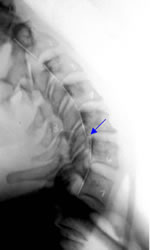
Loss of motion segment integrity

This extension x-ray image
illustrates ligamentous
instability at C5-C6.
The AMA Guides2 attribute
a 25% whole-person
impairment rating to those
who meet loss of motion
segment integrity criteria
in the cervical spine.

Over the last few years, it has become clear from the scientific literature that chronic pain after a rear-end collision is due to injury of the ligaments of the spine.

During a rear-end collision, the lower segments of the cervical spine are rapidly moved forward while the upper portion of the spine lags behind. This creates “shear” forces in the lower spine, which can stretch or tear the spinal ligaments.

This ligamentous injury can result in instability of the cervical spine, which in turn can cause chronic pain and a variety of other symptoms.

A new study1 from Yale University expands on our knowledge of these types of injury. The goal of the study was to determine the injury threshold for the spinal ligaments. The researchers used six human cadaver cervical spines for the experiments. On each spine, they measured the range of motion of each vertebral segment before and after each test. By doing so, they were able to determine the amount of ligament stretch that occurred during the test.

The specimens were tested at four different acceleration levels: 3.5, 5, 6.5, and 8 g. These are the acceleration levels that would be found in low speed collisions.

The authors found that the first significant increase in ligamentous stretching occurred during the 5g collision in the C5-C6 spinal segment—the same spinal segment from which most whiplash symptoms seem to originate.

As the acceleration increased to 6.5 and the 8g, the risk of injury spread to other parts of the spine. The authors sum up their findings:Areas of ligament injury
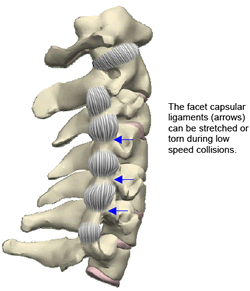
"Biomechanical testing of the [specimens] before and after simulated whiplash demonstrated that the lower cervical spine had the greatest injury potential and the mode of injury was extension. The peak T1 horizontal acceleration of 5 g was determined as the injury threshold acceleration. The first injuries occurred at the C5–C6 level, as indicated by increases in the extension neutral zone. At higher accelerations, the injuries spread to all intervertebral levels of the lower cervical spine from C4–C5 to C7–T1. The extension mode of injury may suggest that the onset of subfailure injuries of the anterior longitudinal ligament and anterior anulus fibers, in addition to facet joint impingement. Clinical evidence supports these injury mechanism hypotheses."

The authors also discuss the chronic nature of such injuries:

"Chronic pain resulting from low-speed collisions may be explained by partial tears of the soft tissues, including anulus fibers, ligaments, and avascular cartilage. Because of poor blood supply, these tissues may not completely heal following injury, resulting in altered cervical spine kinematics that can lead to accelerated degenerative changes and clinical instability."

  1. Ito S, Ivancic PC, Panjabi MM, Cunningham BW. Soft-tissue injury threshold during simulated whiplash: a
    biomechanical investigation. Spine 2004;29:979-987.
  2. American Medical Association. Guides to the Evaluation of Permanent Impairment, 5th Edition, 2000.